

“Every expert was once a beginner“
Rutherford b. hayes
Introduction
Basics
What are Educational Escape Rooms?
Educational escape rooms are immersive and engaging learning experiences that combine the excitement of escape games with educational content. In these interactive environments, participants are presented with puzzles, challenges, and tasks that are not only fun to solve but also designed to enhance their knowledge and critical thinking skills. Participants work as a team to decipher codes, uncover hidden clues, and complete various educational objectives. These unique settings offer a dynamic way to promote active learning, problem-solving, and teamwork, making them an innovative and effective tool for educators seeking to create memorable and impactful learning experiences. Whether used in schools, museums, or corporate training programs, educational escape rooms provide a fresh and captivating approach to learning that leaves participants both informed and entertained.
Framework
Why a framework?
While the primary objective of commercial escape rooms is entertainment, educational escape rooms focus on the achievement of pedagogical goals and the reinforcement of learning content. In light of the growing popularity of escape rooms as a pedagogical tool, it is therefore essential to understand not only the game design aspects of escape rooms but also to develop a deeper comprehension of how these aspects can be designed and applied in relation to educational objectives.
In this context, various frameworks have been proposed that provide structured guidelines and principles encompassing the conceptualization, design, implementation, and evaluation of escape rooms. These theoretical structures serve as a guide for educators and developers to ensure that designed escape rooms are not only engaging and challenging but also effectively support the intended learning outcomes.

A Framework for Educational Escape Rooms in Foreign Language Education
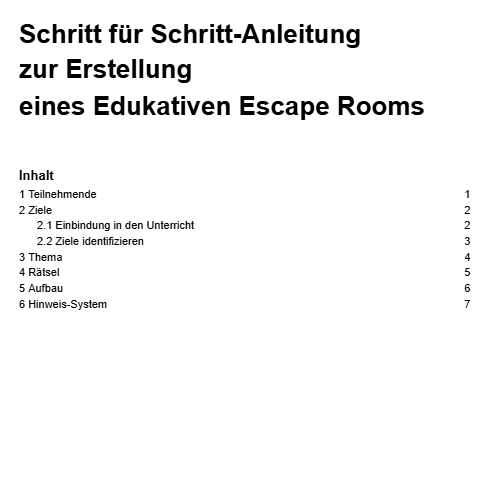
I developed a framework for foreign language education and you can download the step-by-step guide in different languages here.
Creating Your Own Educational Escape Rooms
Designing your own educational escape room involves aligning educational goals with gameplay, choosing relevant puzzles, and structuring the experience so that it promotes active engagement and problem-solving. This applies to both virtual and live escape rooms. This section introduces the resources collected on this site to support this design process.
While the framework for virtual and live escape rooms is the same with regard to educational goals, the mechanisms through which these goals are achieved differ and therefore need to be addressed separately.
Virtual Escape Rooms
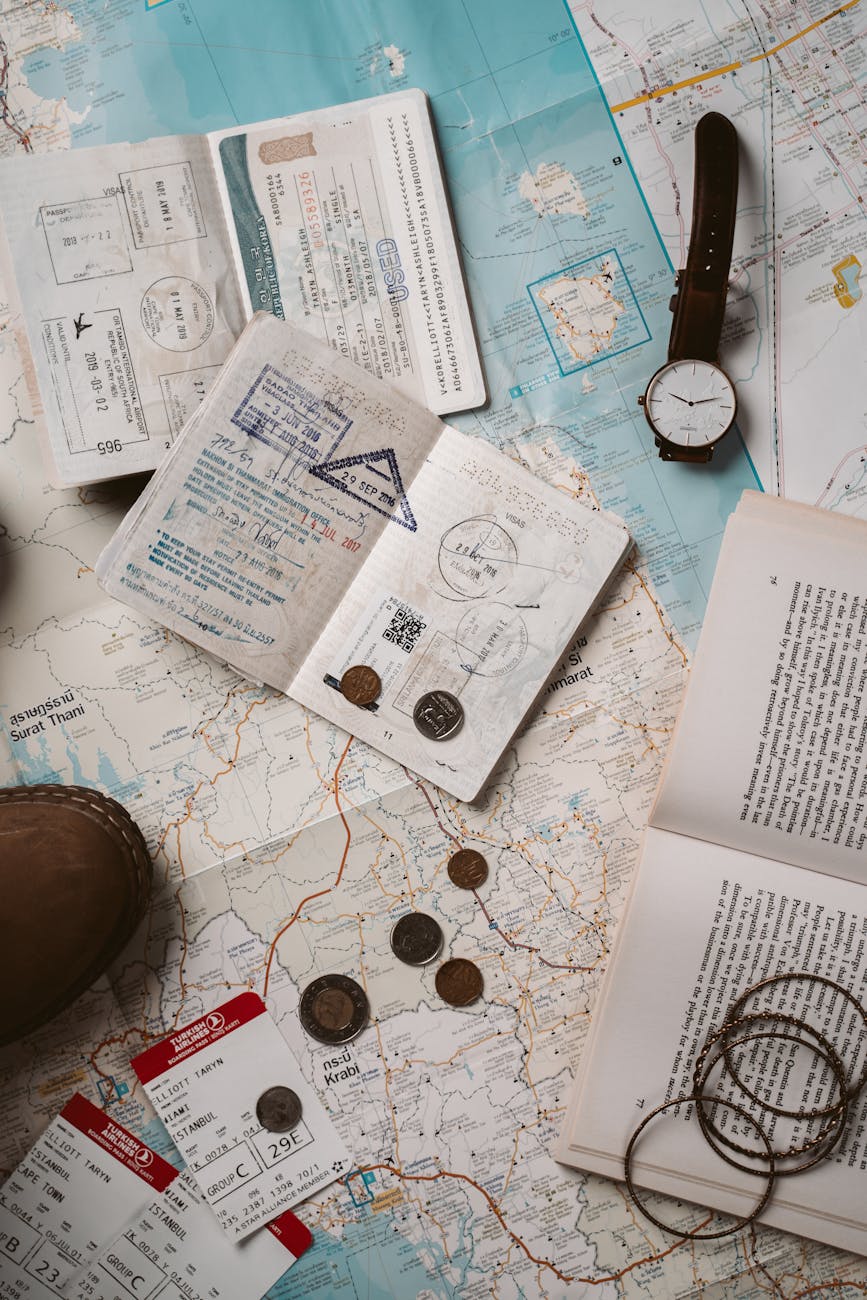
Virtual escape rooms adapt the core elements of escape games to online or digital formats. They use interactive platforms, digital puzzles, and multimedia to create engaging experiences that learners can access remotely, while still requiring collaboration, critical thinking, and application of curricular knowledge.
Virtual escape rooms rely on digital tools and resources to create interactive and engaging learning experiences. The links below provide curated resources to support the design and implementation of virtual escape rooms, covering virtual platforms, puzzle creation, thematic design, and media use.
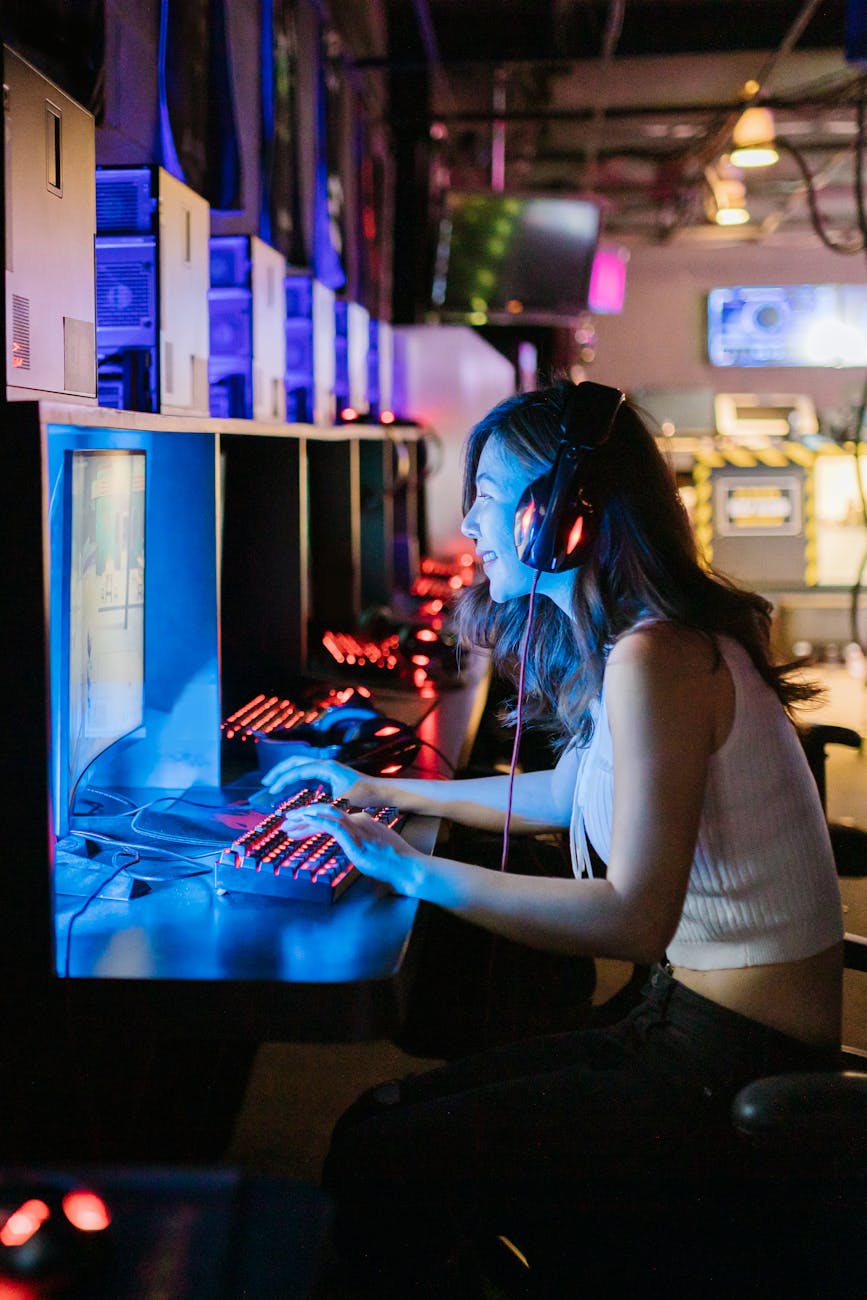
This section includes platforms that can be used to host and structure virtual escape rooms, such as tools for creating interactive websites, collaborative environments, or slide-based escape rooms.

Here you will find digital tools for creating puzzles and challenges, including ciphers; visual puzzle tools such as overlays and other forms of visual manipulation to reveal hidden information; and interactive puzzle tools like learning tools and quiz generators that can be embedded into virtual escape rooms.

This section focuses on tools that simulate physical escape room props in a digital environment, such as Audio Props, Fake News, Visual Props and Maps.

These resources support narrative design by providing ideas, templates, and inspiration for storylines and themes that frame the escape room and enhance immersion.

This section links to sources for images, audio, video, and other media that can be used legally in virtual escape rooms without copyright concerns.

Live Escape Rooms
Live escape rooms take place in physical spaces where learners move through the environment, interact with tangible objects, and uncover clues through direct sensory engagement. Tasks are solved by manipulating materials, observing physical details, and coordinating actions within a shared space and time frame. Live escape rooms can be set up in classrooms or dedicated activity areas and provide opportunities for teamwork, communication, and embodied engagement with learning content.
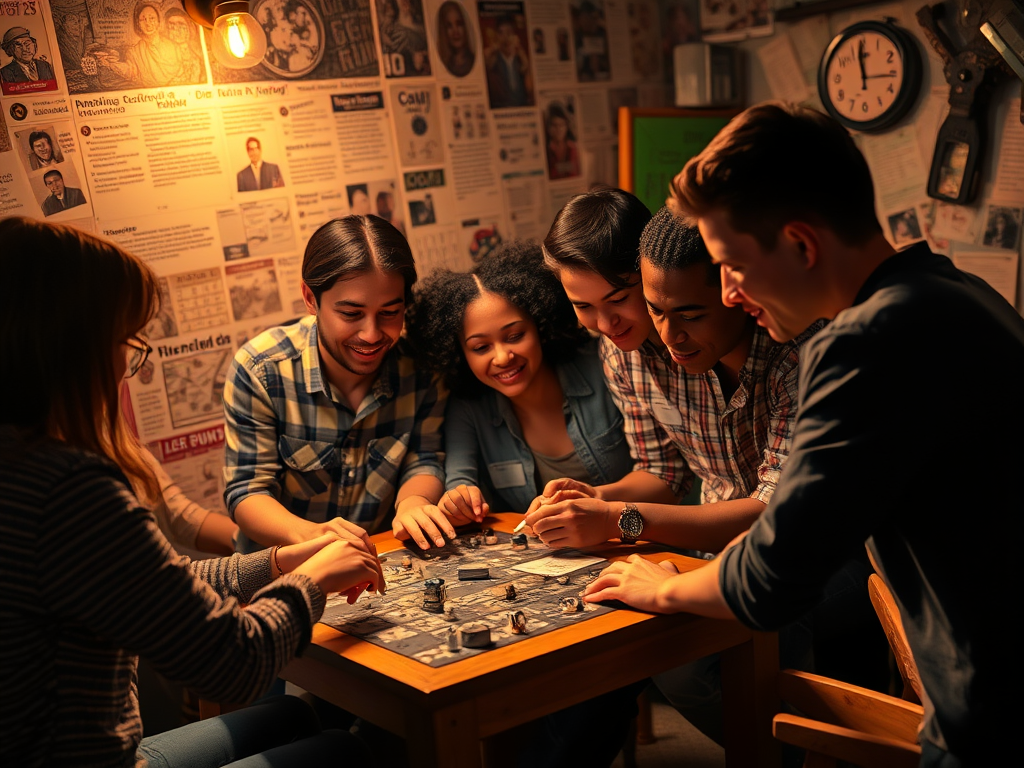
Physical escape room puzzles are based on direct interaction with the environment and materials. They can involve assembling components, exploring objects through touch, working with weight and balance, using magnetism or simple electronic elements, searching for hidden objects, or interpreting sensory cues such as smell. These puzzle types emphasize hands-on engagement and multisensory problem-solving.
Visual puzzles rely on careful observation and the interpretation of visual cues. They can involve the use of UV light, overlays, electronic displays or indicators, and the discovery of hidden objects within the environment. These elements require players to notice details and make visual connections to progress.

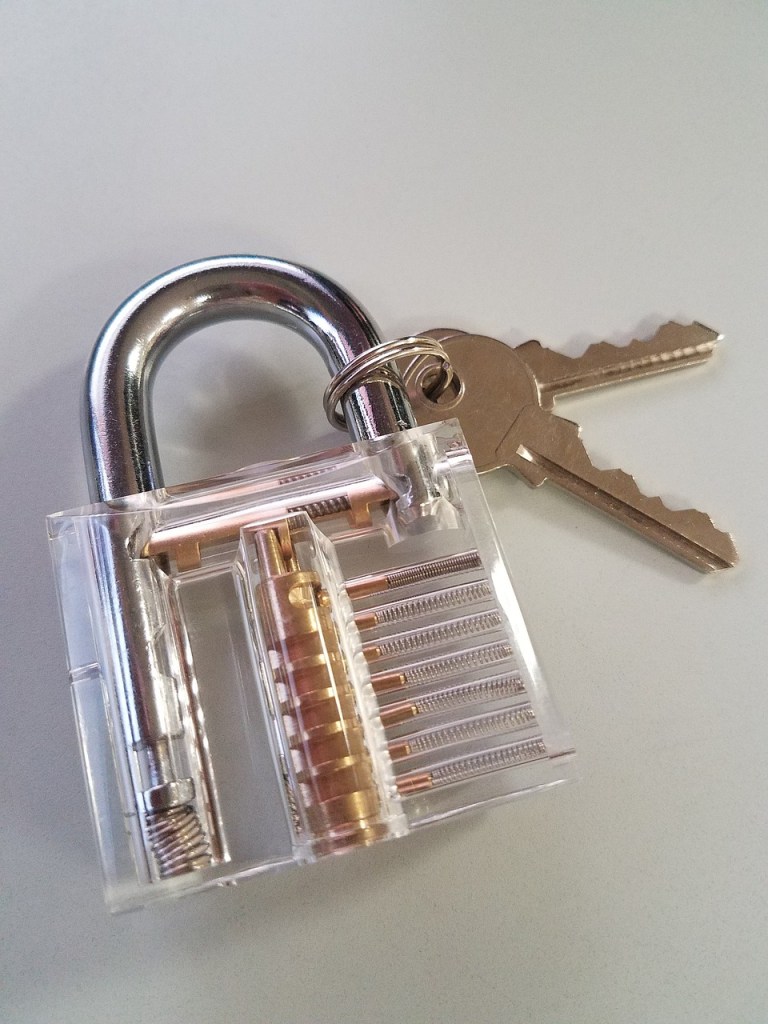
Locks are central elements in many escape rooms and can vary in type and complexity. Common options include key locks and combination locks, which are widely used and easy to integrate, as well as less common or more specialized versions that can serve as highlight elements. Magnetic locks and electronic locks introduce additional technical possibilities, while multi-lock systems require players to solve several challenges in order to unlock a single object, often functioning as key progression points within the game.
Lockable containers are used to hide clues, objects, or information and can take many forms. Some are designed to be locked and include built-in or attachable locks, while others involve furniture or everyday objects not originally intended for locking. With a bit of creativity, almost anything can be turned into a lockable container—even objects that strongly disagree at first.
Clues and props are often integrated into the environment itself, either hidden in plain sight or embedded within spatial and environmental elements. They rely on players’ awareness of their surroundings and their ability to interpret physical space as part of the puzzle-solving process.
Integrating Educational Escape Rooms into your curriculum
Preparation
Preparing learners for an escape room—regardless of whether it is digital or live—helps ensure that the activity supports learning rather than causing unnecessary confusion or cognitive overload. The following elements are recommended:
Introduction
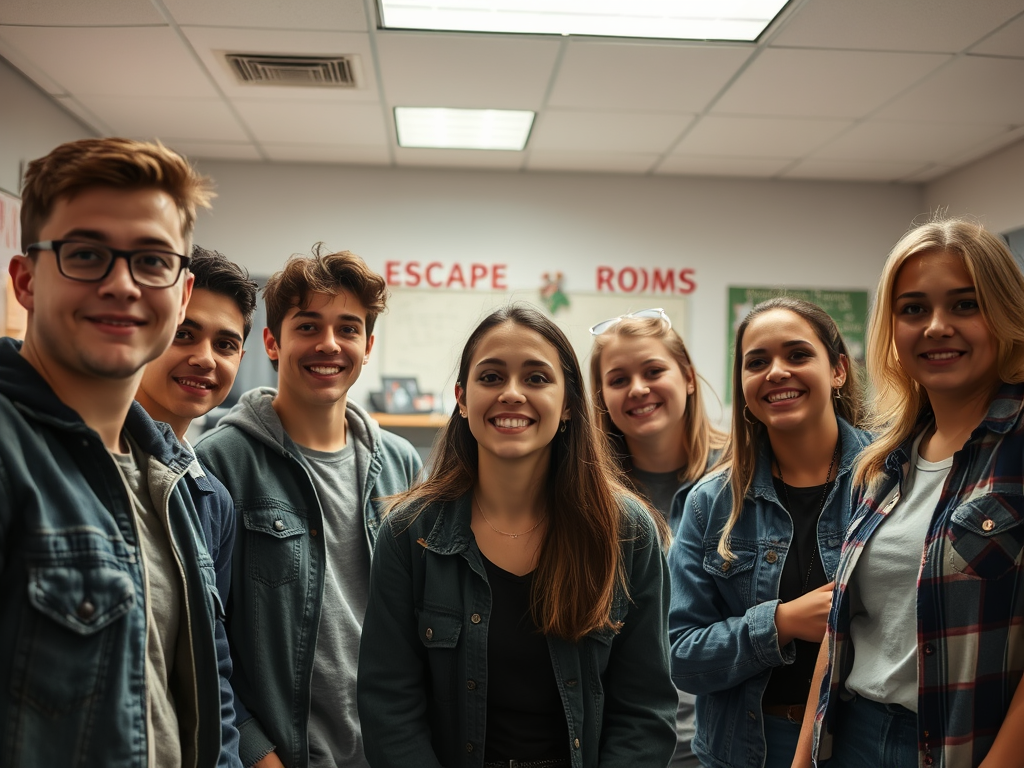
Begin with a short introduction that explains how an escape room works: learners solve tasks together, follow clues, and work against the clock. If the story or scenario is not part of the escape room itself, briefly introduce it beforehand.

Technical Preparation
Address technical aspects in advance to avoid disruptions. This includes checking access to the platform or room, required devices, internet connectivity, logins, and any tools learners will need (e.g. microphones, shared documents). For live escape rooms, clarify physical constraints and available materials.

Evaluation
Evaluating an escape room is important because it provides evidence of whether the learning objectives were achieved and how participants engaged with the tasks. Systematic evaluation helps identify strengths and weaknesses in the design, such as task difficulty, clarity of instructions, and alignment with intended competencies. It also supports data-informed revision, ensuring that future iterations are more effective, inclusive, and pedagogically sound.
More
(Free) Self-Study Courses
UNLOCK MOOC↗︎
Learn how to design and implement Educational Escape Rooms! The UNLOCK course is available in English, Danish, German, Dutch, Lithuanian, Portuguese and Spanish.
UNLOCK Handbook↗︎
This handbook compiles key takeaways from the landscape of Educational Escape Rooms: How to design, set up and facilitate EERs in a pedagogical context.
Research
If you are interested in understanding how and why educational escape rooms work, engaging with research can provide valuable insights. The following sections offer curated resources, including research on commercial escape rooms, studies of educational escape rooms across various disciplines, and case studies and reviews that examine design approaches, implementation, and outcomes.

More (General) Frameworks
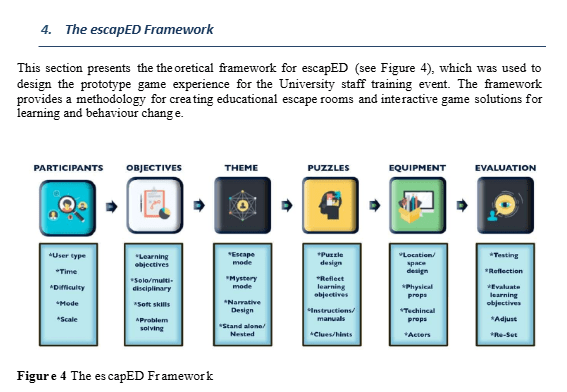
EscapED: A Framework for Creating Educational Escape Rooms and Interactive Games to For Higher/Further Education.↗︎
The EscapED framework is a structured design model for developing educational escape rooms and interactive game-based learning experiences tailored to higher and further education, guiding educators in creating non-digital, human-centred activities that align engaging gameplay with explicit learning objectives and promote skills such as collaboration and problem solving.
Room2Educ8: A Framework for Creating Educational Escape Rooms Based on Design Thinking Principles↗︎
This article proposes Room2Educ8, a learner-centred framework grounded in Design Thinking for systematically designing educational escape rooms, outlining heuristics for stages such as empathising with learners, defining learning objectives and constraints, crafting narrative and puzzles, prototyping and playtesting, and evaluating the resulting experience to support educators in creating robust game-based learning activities.
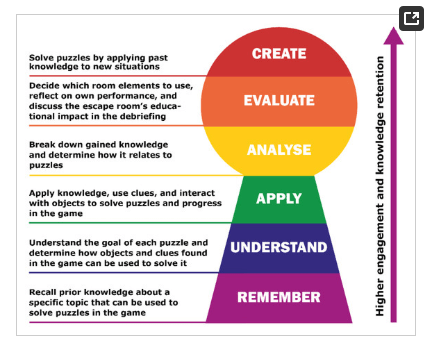
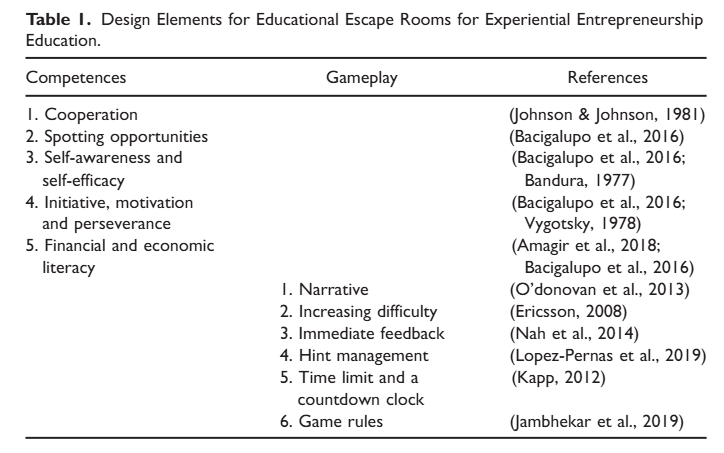
Developing Educational Escape Rooms for Experiential Entrepreneurship Education↗︎
This study examines how educational escape rooms (EERs) can be designed to support experiential entrepreneurship education by identifying and empirically evaluating a set of core design elements—drawn from social cognitive theory, entrepreneurship competences, and gamification literature—and testing an escape room prototype with university students to determine which elements effectively foster entrepreneurial skills and which require refinement.
 learning Locks